Local SEO in 2026: 10 Steps to Get Found on Google Maps
Learn how to improve your local search visibility in 2026 with practical strategies for Google Maps, Google Business Profile, local keywords, website optimization, and customer reviews.
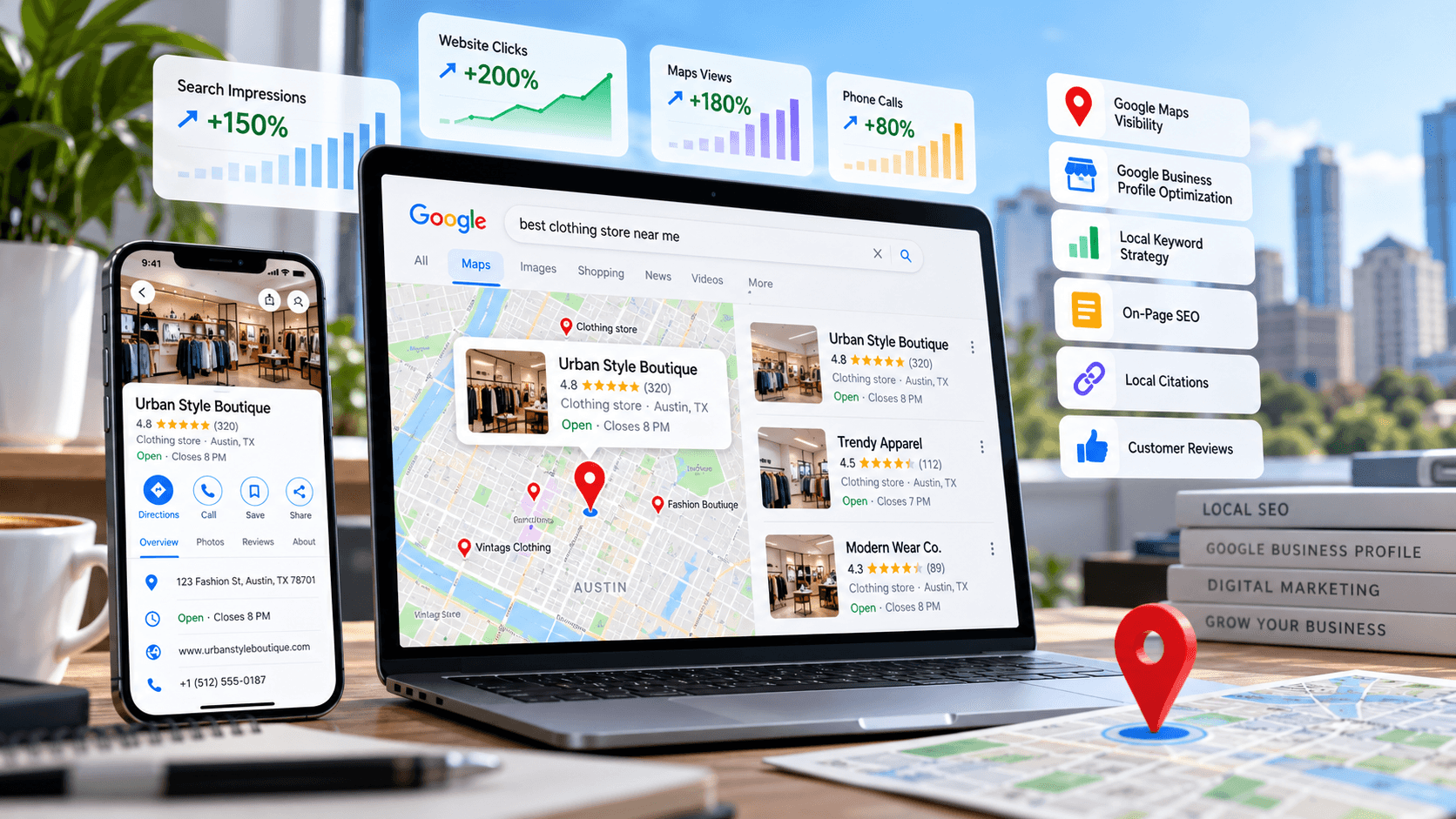
Local SEO in 2026: 10 Steps to Get Found on Google Maps
When customers search for "restaurants near me," "best salon in Austin," or "plumber in London," they are often looking for a nearby business they can contact or visit.
For local businesses, appearing in relevant Google Search and Maps results can create valuable opportunities to connect with these customers.
That is where Local Search Engine Optimization (Local SEO) becomes important.
In this guide, NT Tech Innovation explains 10 practical local SEO strategies that can help businesses strengthen their online presence in 2026.
What Is Local SEO?
Local SEO is the process of improving a business's visibility in location-related search results.
Unlike traditional SEO, which may target customers worldwide, local SEO focuses on reaching people searching for products or services in a specific geographic area.
For example:
- Best digital marketing agency in New York
- Interior designer in Rajshahi
- Clothing store near me
- Emergency plumber in Manchester
- Restaurant in Austin, Texas
A strong local SEO strategy helps search engines understand what your business offers, where it operates, and why its information is relevant to potential customers.
Why Local SEO Matters in 2026
Customers increasingly rely on online search to compare local businesses, evaluate reviews, check operating hours, and find contact information.
Local SEO can support:
- Better visibility for relevant local searches
- More qualified visitors to your website
- Greater discovery through Google Maps
- Additional phone calls and customer inquiries
- Stronger brand recognition in your service area
- More opportunities to convert search interest into customers
However, results depend on competition, location, website quality, and numerous other factors. No legitimate SEO agency can guarantee a specific Google ranking.
1. Create and Verify Your Google Business Profile
A Google Business Profile is one of the most important foundations of local SEO for eligible businesses.
It allows businesses to manage information displayed across Google Search and Maps.
Start by:
- Creating or claiming your eligible business listing
- Completing Google's verification process
- Adding your accurate business name
- Selecting the most appropriate primary category
- Adding your legitimate address or service area
- Updating contact details and business hours
- Linking your official website
Businesses that visit customers rather than serve them at a storefront should configure their service areas and address visibility according to Google's guidelines.
Pro Tip: Avoid creating fake offices, virtual locations, or duplicate profiles to target additional cities.
2. Optimize Your Business Information
Accurate business information helps customers contact you and helps Google understand your business.
Review your:
- Business name
- Address, where applicable
- Phone number
- Website URL
- Business hours
- Services and business categories
Keep essential contact information consistent across your website and relevant business listings.
For example, if your business uses "123 Main Street" on its website, avoid publishing an outdated address on other directories.
Consistency reduces confusion and supports a more reliable customer experience.
3. Perform Location-Based Keyword Research
Local keyword research identifies the phrases your potential customers use when searching for nearby businesses.
A useful keyword strategy combines services, products, and geographic intent.
Examples include:
| Business Type | Local Keyword Example |
|---|---|
| SEO Agency | Local SEO services in Austin |
| Restaurant | Family restaurant in Dhaka |
| Interior Design | Interior design company in Rajshahi |
| Retail Store | Fashion boutique in New York |
| Plumbing | Emergency plumber in Manchester |
Prioritize keywords that reflect real customer needs.
Use Google Search Console, relevant keyword research tools, and competitor research to understand which terms deserve attention.
Avoid repeating city names unnaturally throughout your content.
4. Improve Your Website's On-Page SEO
Your website should clearly explain what your business does, who it serves, and how customers can contact you.
Important on-page SEO elements include:
Page Titles: Write descriptive titles containing the primary service or topic.
Meta Descriptions: Summarize each page accurately and encourage relevant users to visit.
Headings: Use meaningful H1, H2, and H3 headings to organize content.
Internal Links: Connect related services, location pages, and helpful articles.
Image Alt Text: Describe meaningful images clearly and naturally.
Contact Information: Make it easy for visitors to find your business details.
For example, a local SEO service page could use:
Title: Local SEO Services in Austin | Your Business Name
H1: Professional Local SEO Services in Austin
Every page should provide genuinely useful information rather than simply repeating keywords.
5. Create Helpful Location-Specific Content
Businesses serving multiple geographic areas can benefit from informative location pages when each page offers unique value.
A good location page may include:
- Services available in the area
- Relevant project examples
- Local customer questions
- Service coverage information
- Contact and inquiry options
- Original photographs or examples
Avoid automatically generating dozens of nearly identical city pages solely to attract search traffic.
Google recommends creating helpful, reliable, people-first content.
6. Improve Website Speed and Mobile Experience
Many potential customers research businesses using their smartphones.
A slow or difficult-to-navigate website can create unnecessary friction.
Review these areas:
- Responsive page layouts
- Mobile navigation
- Image optimization
- Page loading performance
- Readable text and accessible buttons
- HTTPS security
- Technical indexing issues
Google PageSpeed Insights and Google Search Console can help identify important website performance and indexing problems.
A technically sound website supports both user experience and search accessibility.
7. Build a Strong Customer Review Strategy
Customer reviews can help potential customers evaluate a business.
Google also identifies review information as one of the signals that can contribute to local prominence.
Build a sustainable review strategy by:
- Inviting genuine customers to share their experiences
- Making the review process convenient
- Responding professionally to feedback
- Addressing recurring customer complaints
- Avoiding fake or incentivized reviews
Never purchase fabricated reviews or offer rewards in exchange for positive ratings.
Authenticity and trust should remain the priority.
8. Improve Your Local Business Citations
Local citations are mentions of your business information on websites and directories.
Depending on your market, useful listings may include established local business directories, professional associations, industry-specific directories, and relevant community resources.
Focus on:
- Accurate business information
- Relevant and legitimate directory websites
- Removing outdated contact details
- Avoiding duplicate or misleading listings
- Maintaining consistent branding
Quality and relevance matter more than creating large numbers of low-quality listings.
9. Earn Relevant Local Links and Brand Mentions
Relevant links and mentions can help search engines discover and understand your business.
Practical opportunities include:
- Local business partnerships
- Industry association profiles
- Community event participation
- Relevant local publications
- Useful research and original resources
- Genuine collaborations with other organizations
Avoid buying manipulative links or participating in link schemes intended to artificially influence rankings.
Instead, focus on relationships and resources that provide actual value to your audience.
10. Track Local SEO Performance
Effective SEO requires ongoing measurement.
Two important platforms are:
Google Search Console
Use it to review:
- Organic search clicks
- Search impressions
- Search queries
- Average search position
- Indexing and technical issues
Google Business Profile Performance
For verified and eligible profiles, available metrics may include:
- Profile views
- Search queries
- Website clicks
- Call button clicks
- Direction requests
Remember that a call click does not necessarily mean a completed phone conversation, and an average search position is not a guaranteed ranking in every location.
Compare consistent time periods and focus on metrics that align with your actual business goals.
Common Local SEO Mistakes to Avoid
Some businesses invest time in SEO without addressing basic problems.
Common mistakes include:
- Incomplete or inaccurate business information
- Targeting irrelevant keywords
- Neglecting mobile usability
- Publishing duplicate location pages
- Ignoring technical indexing problems
- Using fake customer reviews
- Building low-quality backlinks
- Failing to measure customer inquiries
- Expecting guaranteed first-page rankings
- Treating SEO as a one-time activity
Local SEO works best as an ongoing process of improvement, analysis, and content maintenance.
Frequently Asked Questions
How long does local SEO take to show results?
There is no universal timeline. Some improvements can affect business visibility relatively quickly, while competitive keywords may require sustained work over several months. Results depend on the website, location, competition, and the improvements implemented.
Is Google Business Profile free?
Yes. Eligible businesses can create and manage a Google Business Profile without paying Google for the listing itself.
Can local SEO help service-area businesses?
Yes. Eligible businesses that visit customers can use a Google Business Profile with appropriate service-area settings and improve their websites for relevant geographic searches.
Can SEO guarantee the number one position on Google?
No. Google determines rankings algorithmically, and local rankings depend on factors including relevance, distance, and prominence. No agency can legitimately guarantee first position.
Is local SEO useful for small businesses?
Yes. Local SEO is especially relevant for businesses serving identifiable geographic markets, including retailers, restaurants, service professionals, and local agencies.
Final Thoughts
Local SEO in 2026 is about helping the right customers discover accurate, useful, and trustworthy information about your business.
Optimizing your Google Business Profile, improving your website, publishing useful local content, earning genuine reviews, and measuring performance can create a stronger foundation for long-term search visibility.
The most effective strategy focuses not only on rankings but also on meaningful customer interactions and business outcomes.
Improve Your Local SEO with NT Tech Innovation
NT Tech Innovation provides digital solutions for businesses seeking to improve their online presence.
Our services include:
- Search Engine Optimization
- Local SEO
- Technical SEO
- Keyword Research
- Website Development
- Website Speed Optimization
- UI/UX Design
- Analytics and Conversion Tracking
Whether you operate a local shop, professional service business, or growing company, a well-structured SEO strategy can support your digital growth.
Contact NT Tech Innovation to discuss your website and SEO objectives.
References: