WordPress vs Custom Website: Which Is Better for Business?
WordPress or custom website development? Compare cost, flexibility, performance, scalability, security, and maintenance to choose the right solution for your business.
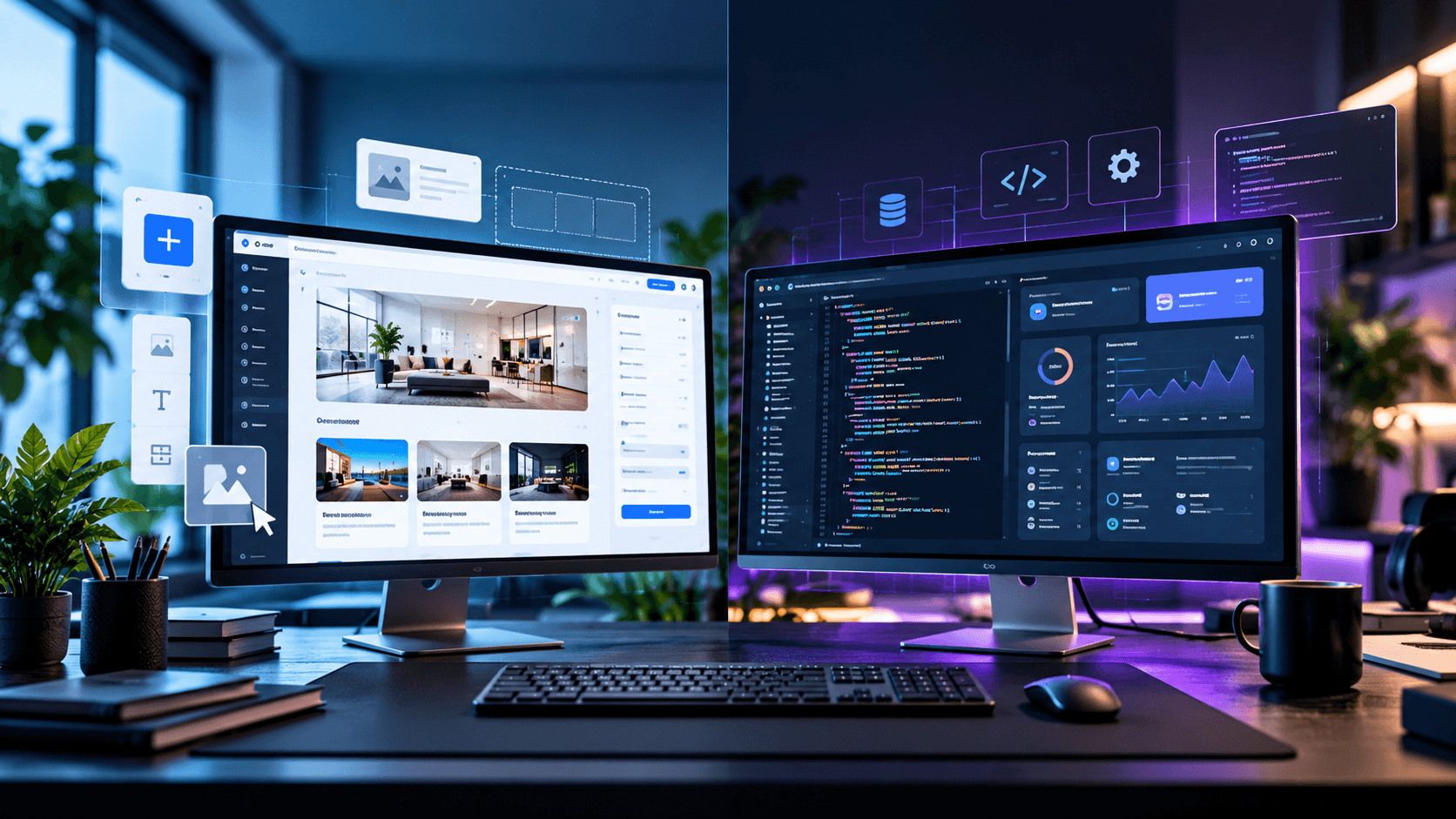
WordPress vs Custom Website: Which Is Better for Your Business?
Choosing the right technology for your business website is an important decision. Your website represents your brand, introduces your services, generates leads, and often becomes the foundation of your digital operations.
Two common options are WordPress development and custom website development.
Both approaches can deliver professional results, but they serve different business requirements.
In this guide, NT Tech Innovation explains the key differences to help you make a more informed investment.
What Is a WordPress Website?
WordPress is an open-source content management system (CMS) that allows businesses to create and manage websites through an administrative interface.
It supports a wide range of website types, including corporate websites, blogs, portfolios, and online stores.
With themes and plugins, WordPress can be extended to support additional functionality without developing every feature from scratch.
WordPress is often suitable for:
- Small and medium-sized business websites
- Corporate websites and service pages
- Blogs and publishing platforms
- Portfolio websites
- WooCommerce online stores
- Content-driven marketing websites
One major advantage is that nontechnical team members can update pages, publish articles, and manage website content.
What Is Custom Website Development?
Custom website development involves designing and building a website or web application around specific business requirements.
Developers may use technologies such as React, Next.js, Node.js, PHP, or other suitable frameworks and backend systems.
Instead of depending primarily on predefined themes or plugins, the development team creates tailored functionality and integrations.
Custom development is often suitable for:
- SaaS platforms
- Customer and employee portals
- Custom CRM and ERP systems
- Complex booking applications
- Business management dashboards
- API-connected web platforms
- Specialized digital products
Custom development provides greater control over architecture and features, although it usually requires more engineering resources.
1. Development Cost
Cost is one of the first factors businesses consider.
WordPress
WordPress can be cost-effective when the required features are already supported by reliable themes or plugins.
However, expenses may include premium extensions, hosting, design customization, development, and ongoing maintenance.
Custom Website
Custom development often requires a larger initial investment because the application architecture, interfaces, and business logic must be designed and implemented.
That investment may be justified when standard software cannot meet important business requirements.
Recommendation: Compare total ownership costs over several years rather than focusing only on the initial development quotation.
2. Design and User Experience
A website should reflect your brand and make important actions easy for visitors.
WordPress can support highly customized designs, particularly when implemented by experienced developers.
Custom development can offer additional freedom for unique interfaces, complex interactions, and application-specific workflows.
Neither approach automatically produces better UI/UX.
The outcome depends on research, design quality, accessibility, implementation, and testing.
3. Website Speed and Performance
Website performance affects usability and can influence whether visitors continue browsing.
Both WordPress and custom-built websites can deliver excellent performance when developed correctly.
Common performance problems include oversized images, unnecessary scripts, excessive third-party integrations, slow databases, and poorly configured hosting.
Google's Core Web Vitals measure important aspects of real-world user experience:
- LCP: Loading performance
- INP: Responsiveness
- CLS: Visual stability
For a good experience, Google recommends an LCP within 2.5 seconds, INP below 200 milliseconds, and CLS below 0.1 at the 75th percentile of page loads.
These are performance targets, not guarantees of higher search rankings.
4. Search Engine Optimization
Both WordPress and custom websites can be optimized for search engines.
A strong SEO implementation typically includes:
- Descriptive page titles and meta descriptions
- Clear heading structures
- Search-friendly URLs
- Internal linking
- XML sitemaps
- Appropriate canonical URLs
- Mobile-friendly layouts
- Crawlable and indexable content
- Relevant structured data
- Useful, original content
WordPress provides convenient publishing tools and many SEO extensions.
Custom applications can provide detailed technical control, but developers must correctly implement indexing, metadata, rendering, and other SEO requirements.
The platform alone does not determine SEO success.
5. Security and Maintenance
Every business website needs ongoing security attention.
For WordPress, this includes keeping core software, plugins, themes, and hosting components updated.
For custom applications, the development team must maintain framework dependencies, access controls, authentication, validation, and infrastructure security.
Additional good practices include:
- Strong administrator authentication
- Multi-factor authentication where possible
- Regular backups
- Least-privilege access
- Dependency security updates
- Monitoring and incident response planning
Neither WordPress nor custom development is inherently immune to security problems.
6. Scalability and Integrations
As your business grows, you may need additional features, users, products, or integrations.
WordPress can scale to substantial traffic and complex functionality with appropriate engineering and infrastructure.
Custom development can be a better choice when your business requires highly specialized workflows, complex data relationships, or extensive integrations with external systems.
Examples include real-time analytics, multi-tenant SaaS systems, custom subscription engines, and interconnected enterprise applications.
The right architecture depends on workload and future requirements, not simply the platform name.
7. Which Option Should You Choose?
Choose WordPress When:
- You need a content-focused corporate website
- Your team will frequently update pages or blog posts
- Standard plugins meet most requirements
- You want relatively straightforward publishing workflows
- Your budget favors a conventional CMS solution
Consider Custom Development When:
- You need specialized business processes
- Your product requires complex user roles or dashboards
- Standard plugins introduce unnecessary limitations
- You need substantial API or system integrations
- Your website is effectively a software product
A hybrid approach may also work. For example, a business might use a CMS for publishing content while operating a separate custom web application.
Frequently Asked Questions
Is WordPress good for professional businesses?
Yes. WordPress supports many types of professional business websites. Design, implementation quality, maintenance, and the suitability of its features matter more than the CMS label.
Is a custom website always faster?
No. Performance depends on development quality, hosting, caching, scripts, database design, and other technical factors.
Which option is better for SEO?
Both can perform well in search when technical SEO and content are implemented correctly.
Can I migrate from WordPress to a custom website later?
Yes, but migration requires careful planning for content, URLs, SEO redirects, data, and functionality.
Final Thoughts
The best website technology is the one that fits your business model, customer needs, operational requirements, and long-term growth plans.
WordPress can be an excellent solution for businesses that prioritize content management and established website functionality.
Custom development may be more appropriate for companies building advanced digital products or specialized software systems.
At NT Tech Innovation, we help businesses evaluate their technical requirements and develop suitable websites and digital solutions.
Need a professional business website or custom web application?
Visit NT Tech Innovation to explore our web development services and discuss your project.